
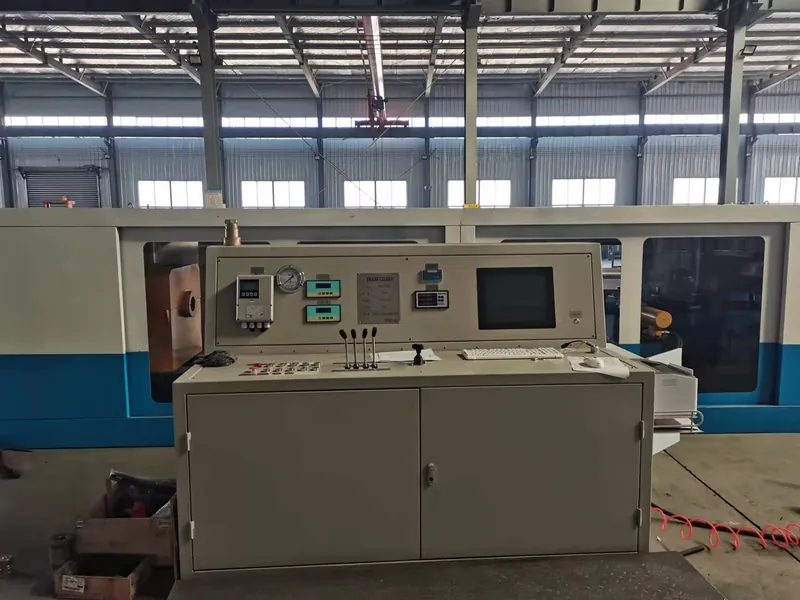
Testing the output of an assembled mud motor
The full-motor bench runs an assembled positive-displacement drilling motor with a controlled fluid supply and load on the output shaft. The recorded torque, speed and pressure can then be compared with the performance references for that motor and those test conditions.
The ZRSYT-IV motor-section tester has a different purpose: checking power-section sealing, rotor/stator fit and pressure differential. State whether your job concerns the power section or the output of the complete motor, because the two tests need different equipment.
Specify the test points and complete circuit
The dynamometer, fluid circuit and instruments need to work together at the required test points. Send the combinations of torque, speed, flow and pressure you need, rather than a separate maximum for each parameter.
Specifications reviewed 12 September 2026.
Loading, measurements and test scope
Measure the motor under load
The loading system applies resistance at the motor output while fluid passes through it. Recording torque and speed under that load lets the workshop assess output performance as well as shaft rotation.
Keep the test conditions with the curve
Save the flow, fluid type and temperature conditions with the performance readings. Compare the curve with reference data for the same motor and suitable test conditions, so differences in the setup remain visible.
Choose the complete-motor or section test
A full-motor bench measures assembled-motor output. The motor-section tester checks the power section. Define which results you need before comparing the circulation, loading, fixtures and instruments.
Connect results to the motor serial number
Link the tables and curves to the tested motor and its acceptance procedure. Specify the report fields and the original data you need to retain when selecting the controls.
Motor and installation requirements
The technical proposal states the bench ratings, measurement channels and included options. Check it against the motor range, required operating points and available workshop utilities.
| Parameter | What to consider |
|---|---|
| Output torque · N·m | Torque describes shaft output under load; select the loading and measurement envelope for the intended motors. |
| Rotational speed · r/min | Record speed with torque and flow to compare the motor’s behavior across the agreed load range. |
| Circulation flow · L/s | Flow is a test condition as well as a measured quantity; pump and circuit scope require review. |
| Pressure · MPa | Inlet and outlet readings establish differential pressure across the defined measurement points, alongside the torque result. |
| Medium temperature · °C | State the test fluid and its temperature so measured performance is compared with appropriate reference conditions. |
| Power · kW; efficiency · % | Derived performance values depend on the measured channels and calculation method agreed for the test system. |
Planning a motor performance test
- 01
Set the test scope
Identify the motor configuration and performance reference. Agree the measurements, operating conditions and acceptance requirements before selecting the equipment.
- 02
Check the motor and test setup
Review the inspection and bearing-condition records, fixtures and instrument calibration. The test must fall within both the motor’s limits and the bench’s capacity.
- 03
Review the performance curve
Compare the baseline readings and response to load under the approved procedure. Check the instruments and test conditions when investigating an abnormal reading.
- 04
Record the assessment
Review the readings and post-test inspection against the acceptance criteria. Save the conclusion and any unresolved findings under the motor serial number.
This describes the preparation and review required for a test. The approved motor procedure and equipment instructions set the operating limits.
Motor test bench applications
Manufacturing quality checks
Check new motor assemblies against their performance requirements and keep the results under the production serial number.
Repair and refurbishment
Assess performance after repair and compare the assembled motor with the applicable return-to-service requirements.
Workshop diagnostics
Compare a motor’s measured behavior with the appropriate reference data when investigating a reported problem or assessing an incoming tool.
What to retain in a motor test report
- Motor serial number, size, configuration and customer or job reference.
- The acceptance document, test fluid and measured temperature conditions.
- Torque, speed, flow and pressure readings with the relevant curves.
- Calibration references and inspection findings within the agreed test scope.
- Test date, responsible personnel, review comments and the acceptance decision.
Mud motor test bench questions
How does a motor-section tester differ?
ZRSYT-IV checks motor-section sealing, fit and pressure differential. The full-motor dynamometer measures assembled-motor output under fluid flow and shaft load. Compare their specifications separately.
Can the test use clean water?
The published full-motor reference specifies clean water. The test plan still needs to state fluid and temperature conditions and use performance references suitable for those conditions.
What makes a result acceptable?
Use the motor manufacturer’s or customer’s applicable requirements. Review the required performance measurements and inspection findings together; a single torque reading is not a complete acceptance test.
What do you need to select the bench?
Send the motor dimensions and the required torque, speed, flow and pressure at each test point. Include the test fluid, utilities and reporting needs. We also need to agree the cooling, loading and any extra measurement channels.